

What Is Tethered Oral Tissue (TOT)?
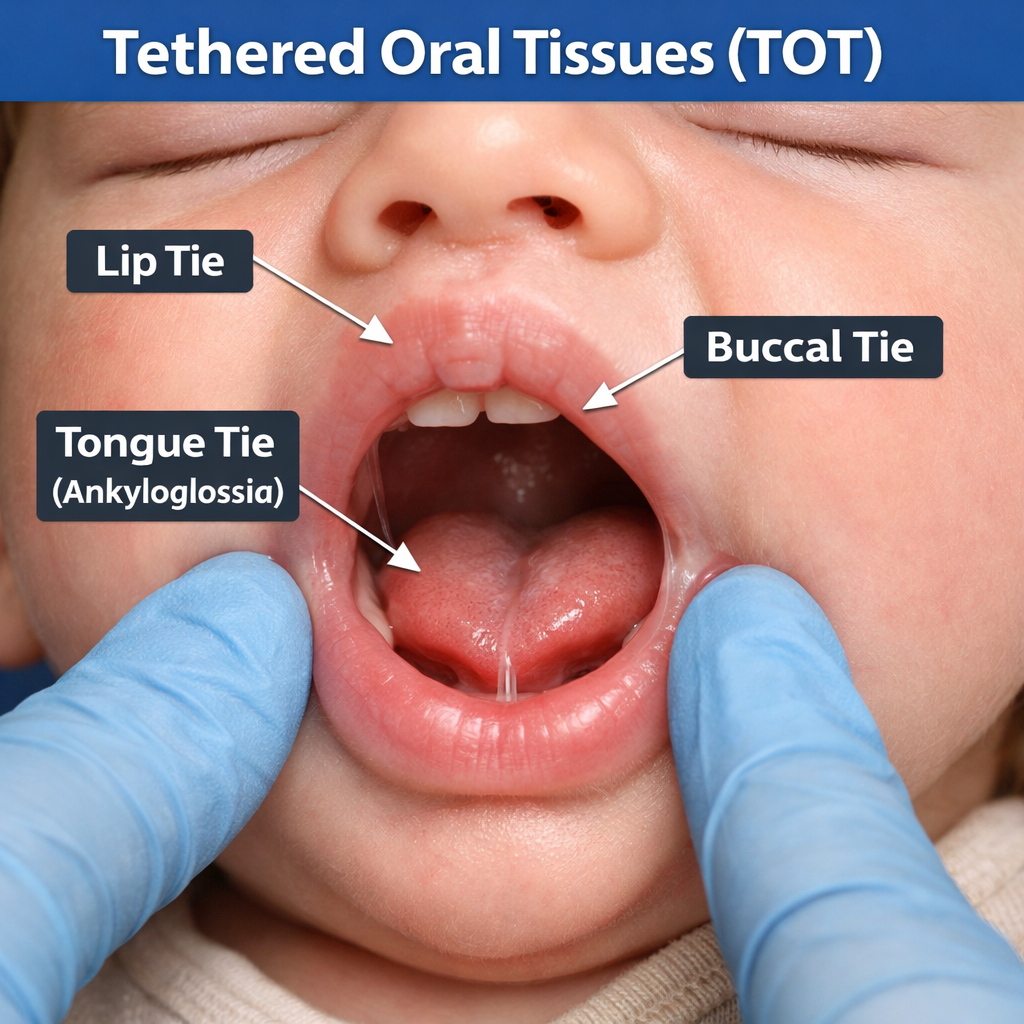
Tethered oral tissue (TOT) is an umbrella term used to describe conditions where the soft tissue connecting the tongue, lips, or cheeks to the floor or roof of the mouth is too short, thick, or tight — restricting normal movement and function.
The most common forms of tethered oral tissue include:
- Tongue-Tie (Ankyloglossia) — when the lingual frenum (the band of tissue beneath the tongue) is too tight or short, limiting the tongue’s range of motion.
- Lip-Tie — when the labial frenum (the tissue connecting the upper or lower lip to the gum line) is overly restrictive, affecting latch, oral hygiene, and dental development.
- Buccal Tie — tightness in the cheek tissue that can affect jaw development and feeding mechanics in infants.
TOT is more common than many parents realize and can range from mild to severe. The good news? When identified early and treated gently, the impact on your child’s development can be profound.
Request an AppointmentHow Does TOT Affect Infants, Children & Teens?
Tethered oral tissue doesn’t just affect newborns — its effects can follow a child through every stage of development if left untreated.
In Infants:
- Difficulty latching onto the breast or bottle
- Prolonged, exhausting feeding sessions
- Poor weight gain or failure to thrive
- Clicking or smacking sounds during nursing
- Excessive gas, colic, or reflux symptoms
- Nipple pain or damage in breastfeeding mothers
In Toddlers & Young Children:
- Picky eating or difficulty managing certain food textures
- Open-mouth posture and mouth breathing
- Speech delays, articulation difficulties, or a “lisp”
- Crowded teeth or high, narrow palate
- Dental hygiene challenges (difficulty cleaning the front teeth)
In Older Children & Teens:
- Jaw tension, TMJ discomfort, or headaches
- Difficulty swallowing or chewing
- Dental spacing issues, especially between the upper front teeth
- Sleep-disordered breathing or snoring
- Ongoing speech concerns
Recognizing the Signs of Tethered Oral Tissue
Many families come to us after months of challenges they couldn’t quite explain. If any of the following sound familiar, a TOT evaluation may provide the answers you’ve been looking for:
- Your baby is unable to maintain a deep latch and frequently slips off the nipple
- Breastfeeding is consistently painful for mom despite correct positioning
- Your child has a heart-shaped or notched tongue tip when they stick it out
- Your child’s tongue cannot reach the roof of their mouth
- There is a visible tight band under the tongue or between the upper lip and gums
- Your child’s upper front teeth have a noticeable gap
- Your child breathes primarily through their mouth
We always encourage parents to trust their instincts. If something feels “off” with feeding, speech, or your child’s oral posture, please don’t hesitate to schedule an evaluation. Early identification is key.
Grading Tethered Oral Tissue
Not all tongue or lip ties are the same. At Growing Smiles Pediatric & Adolescent Dentistry, we use an evidence-based classification system to assess the type and severity of tethered oral tissue before recommending any treatment.
Tongue ties are commonly graded on a scale from Class I (most visible and easiest to identify) to Class IV (submucosal — beneath the surface and often missed). A thorough functional assessment — not just a visual inspection — is essential to properly identify all classes of TOT.
Our doctors are trained to evaluate both the appearance and the functional impact of tethered tissue to make sure nothing is overlooked.
Treatment: Laser Frenectomy at Growing Smiles Pediatric & Adolescent Dentistry
When treatment is recommended, we use the Solea Laser — a cutting-edge CO₂ laser system that makes the release procedure gentle, fast, and remarkably comfortable.
Here’s what makes our approach different:
- No scalpels or scissors — the laser release is precise and clean
- Little to no bleeding — the laser seals tissue as it works
- No stitches required
- Most procedures take just minutes
- Minimal anesthesia — often none at all for infants
- Infants can nurse immediately following the procedure
We take a team-based approach to TOT treatment. Depending on your child’s age and needs, we may coordinate care with your lactation consultant, speech-language pathologist, myofunctional therapist, chiropractor, or other providers to support the best possible outcomes.
Before & After: What to Expect
Before the Procedure: We’ll begin with a thorough consultation to assess your child’s oral tissue and discuss any feeding, speech, or dental concerns. We’ll answer all your questions and make sure you feel fully informed before moving forward.
During the Procedure: The Solea Laser release is quick — typically completed in under 5 minutes. Most infants remain calm throughout, and older children tolerate the procedure very well.
After the Procedure: We’ll walk you through a simple stretching routine to prevent reattachment and support healing. Infants can typically nurse right away, and most children return to normal activities the same day.